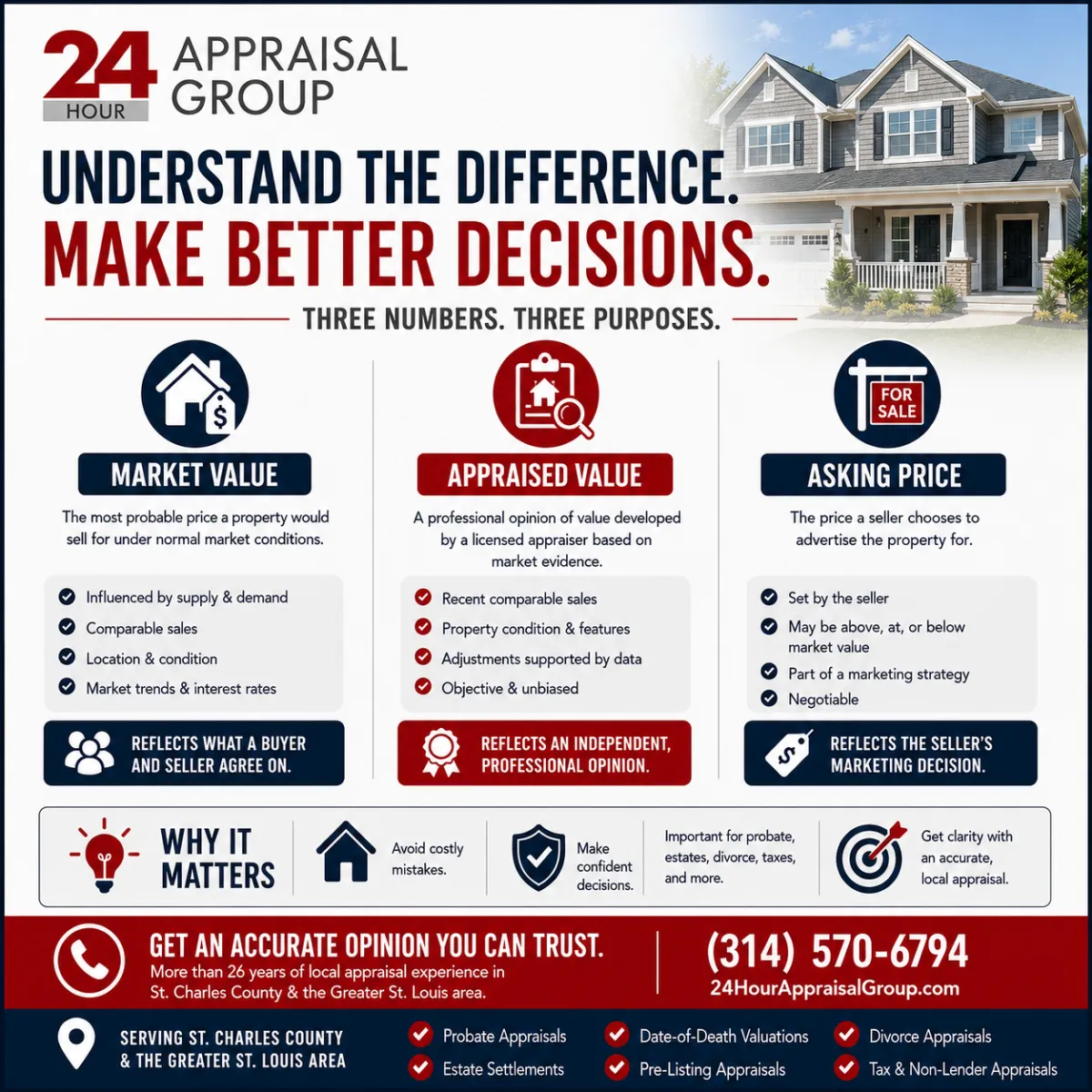
The Difference Between Market Value, Appraised Value, and Asking Price
By a St. Charles County Realtor, Licensed Appraiser, and Real Estate Investor
One of the most common questions I hear from homeowners is:
"How much is my home worth?"
It's a simple question—but the answer isn't always simple.
Many people assume that a home's market value, appraised value, and asking price are all the same. In reality, they represent three different concepts, and understanding those differences can help you make better decisions when selling, buying, settling an estate, or planning for the future.
After more than 26 years of appraising residential properties throughout St. Charles County and the Greater St. Louis area, I've seen countless homeowners confuse these terms. Knowing what each one means can help you avoid unrealistic expectations and make informed decisions with confidence.
What Is Market Value?
Market value is the most probable price a property would sell for under normal market conditions.
In other words, it reflects what a typical buyer is willing to pay and what a typical seller is willing to accept—when neither party is under pressure and both have reasonable knowledge of the property and market.
Market value is influenced by factors such as:
Property condition
Location
Neighborhood demand
Comparable sales
Interest rates
Buyer competition
Inventory levels
Current market trends
Market value is constantly changing because the real estate market is constantly changing.
A home that was worth $350,000 last year may be worth more—or less—today depending on local market conditions.
What Is Appraised Value?
Appraised value is a professional opinion of value developed by a licensed or certified appraiser.
Unlike an online estimate or casual opinion, an appraisal follows established appraisal standards and is supported by market data.
An appraiser evaluates factors including:
Recent comparable sales
Property size
Overall condition
Functional layout
Lot characteristics
Quality of construction
Improvements and updates
Local market conditions
Every adjustment made during the appraisal process is supported by market evidence.
The goal isn't to "hit a number."
The goal is to develop an objective, well-supported opinion of value.
What Is Asking Price?
The asking price (or list price) is simply the amount a seller chooses to advertise the property for.
That price is not automatically the home's value.
A seller may decide to:
Price below market value to encourage multiple offers
Price at market value to attract qualified buyers
Price above market value hoping to negotiate
An asking price is a marketing decision.
Whether it accurately reflects market value depends on the pricing strategy and local market conditions.
Why These Numbers Are Sometimes Different
Many homeowners are surprised when these three numbers don't match.
For example:
Market Value: $400,000
Appraised Value: $398,000
Asking Price: $425,000
Or:
Market Value: $400,000
Appraised Value: $402,000
Asking Price: $389,900
Neither example is necessarily wrong.
Pricing strategy, buyer demand, and negotiation goals all influence the asking price.
An appraisal, however, remains an independent opinion based on current market evidence.
Why Online Estimates Can Cause Confusion
Many homeowners begin with an online valuation tool.
These estimates can provide a general starting point, but they have limitations.
Online models cannot fully evaluate:
Interior condition
Renovations
Deferred maintenance
Functional layout
Basement finish quality
Odors
Structural concerns
Curb appeal
Neighborhood nuances
Two homes with similar square footage can have very different values because of these factors.
That's why professional appraisals often differ from automated online estimates.
Why This Matters When Selling an Inherited Home
For inherited properties, understanding these differences becomes even more important.
Families often ask:
Should we list the property?
Should we accept a cash offer?
Should we make repairs first?
What is the property actually worth?
Knowing the difference between market value, appraised value, and asking price helps families compare their options more effectively.
Without an accurate understanding of value, sellers may:
Accept an offer that is lower than market value
Spend money on unnecessary renovations
Overprice the property and reduce buyer interest
Misunderstand the property's true equity
Why Accurate Valuation Matters
An independent appraisal can provide valuable guidance in many situations, including:
Probate
Estate settlement
Inherited property
Divorce
Tax planning
Pre-listing decisions
Date-of-death valuations
Non-lender valuation needs
Having a professional opinion of value helps replace assumptions with objective information.
Experience Makes a Difference
After appraising thousands of homes over the past 26 years, I've learned that no two properties are exactly alike.
Even homes located on the same street can have different values based on:
Condition
Updates
Lot characteristics
Buyer demand
Floor plan
Comparable sales
Market timing
That's why determining value requires more than looking at recent sales or entering an address into an online calculator.
It requires local market knowledge, professional analysis, and experience interpreting how buyers respond to different properties.
The Bottom Line
Although people often use the terms interchangeably, market value, appraised value, and asking price each serve a different purpose.
Market value reflects what a property is likely to sell for under current market conditions.
Appraised value is an independent, professional opinion of value based on market evidence.
Asking price is the amount a seller chooses to list the property for as part of their marketing strategy.
Understanding these differences can help homeowners make better decisions, whether they're selling an inherited property, preparing to list a home, settling an estate, or simply wanting a clearer understanding of their property's value.
Need a Professional Appraisal?
At 24 Hour Appraisal Group, we provide trusted residential appraisal services throughout St. Charles County and the Greater St. Louis area. Whether you need an appraisal for probate, estate settlement, inherited property, divorce, tax planning, pre-listing decisions, date-of-death valuations, or other non-lender purposes, we're here to provide an independent opinion of value backed by more than 26 years of local experience.
Before making important decisions about your property, contact 24 Hour Appraisal Group for an appraisal you can trust.
