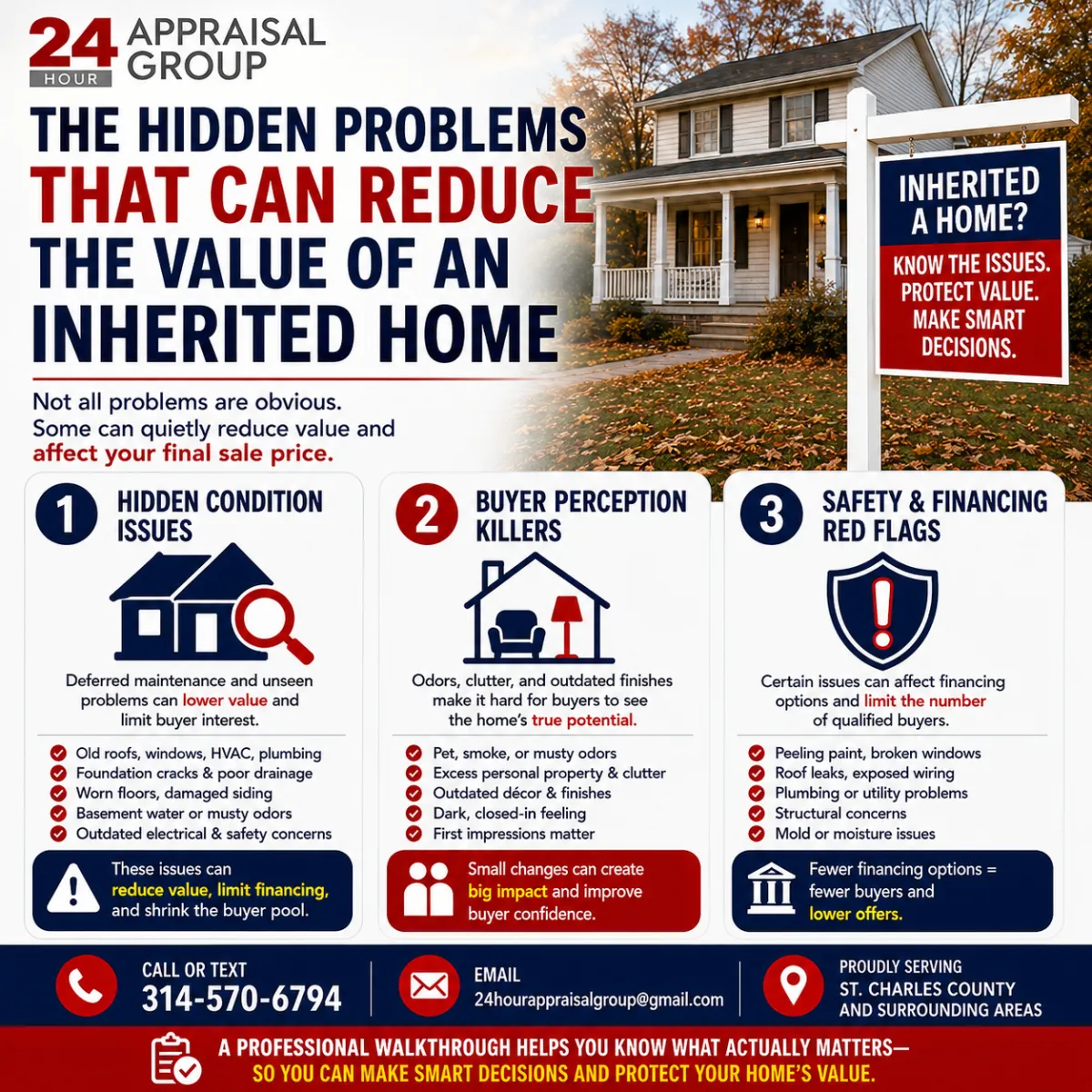
The Hidden Problems That Can Reduce the Value of an Inherited Home
By a St. Charles County Broker and a Certified Residential Appraiser
When families inherit a home, they often look at the property through memories.
They remember holidays, family gatherings, childhood bedrooms, backyard cookouts, and years of life inside the home.
But buyers, appraisers, inspectors, and lenders look at the property differently.
They look at condition.
They look at risk.
They look at updates, deferred maintenance, functionality, and whether the home meets today’s market expectations.
After more than 26 years in real estate, appraising thousands of homes, and helping families throughout St. Charles County, I have seen many inherited property owners surprised by the issues that can quietly affect value.
Some problems are obvious.
Others are easy to miss.
Before selling an inherited home, it is important to understand what may reduce value, what may be worth addressing, and what may not be worth spending money on.
Inherited Homes Often Have Deferred Maintenance
Many inherited homes were owned by the same person for decades.
Over time, homeowners may stop making updates or delaying repairs because the home still “works” for them.
That is completely understandable.
But when the home is placed on the market, buyers may notice things the family has become used to seeing.
Common deferred maintenance items include:
Older roofs
Original windows
Outdated electrical panels
Old HVAC systems
Plumbing issues
Peeling exterior paint
Foundation cracks
Worn flooring
Damaged siding
Poor drainage
One or two of these items may not be a major issue.
But when several are present at the same time, buyers often start reducing what they are willing to pay.
Outdated Does Not Always Mean Low Value
One mistake families make is assuming that an outdated home is automatically a bad property.
That is not true.
Many inherited homes are structurally solid but cosmetically dated.
A home may have:
Original cabinets
Older carpet
Wallpaper
Brass fixtures
Older bathroom tile
Dark wood trim
Popcorn ceilings
These features may affect buyer perception, but they do not always mean the home needs a full renovation before selling.
As a Realtor and appraiser, I look at whether the issue is cosmetic, functional, or structural.
That difference matters.
Cosmetic updates may influence presentation.
Functional issues may affect buyer financing.
Structural or safety issues may affect value more significantly.
Buyers Pay Attention to Smell
This is one of the most overlooked issues in inherited homes.
A home can look acceptable in photos but lose buyer interest the moment someone walks through the front door.
Common odor issues include:
Pet odors
Smoke smells
Musty basement odors
Mold or mildew smells
Long-term vacancy smell
Old carpet odor
Smell can strongly affect buyer perception.
Sometimes cleaning, carpet removal, air circulation, or professional odor treatment can make a major difference.
Other times, odor may signal a deeper issue that needs to be evaluated.
Personal Property Can Distract Buyers
Many inherited homes are full of furniture, clothing, tools, boxes, collections, and personal belongings.
This is normal.
Families often feel overwhelmed and do not know where to start.
However, too much personal property can make it difficult for buyers to see the home clearly.
It can also make rooms feel smaller, darker, and more outdated than they really are.
That does not always mean the entire house must be emptied before selling.
In some cases, a light cleanout and organization may be enough.
In other cases, removing excess items can help the home show better and improve buyer confidence.
The key is knowing where effort will produce the best return.
Safety and Financing Issues Can Affect the Buyer Pool
Some problems do more than reduce buyer interest.
They may limit which buyers can purchase the home.
Certain condition issues may create challenges for buyers using traditional financing.
These may include:
Missing handrails
Peeling paint
Broken windows
Roof leaks
Exposed wiring
Major plumbing problems
Non-functioning utilities
Structural concerns
Mold-like conditions
When fewer buyers can qualify to purchase a home, the seller may be left with mostly cash buyers or investors.
That can reduce competition and lower the final sale price.
This is why it is important to understand the home’s condition before deciding how to sell.
Basements Matter in St. Charles County
In many parts of St. Charles County, basements are a major value factor.
Buyers often pay attention to:
Finished basement quality
Signs of water intrusion
Foundation cracks
Sump pump condition
Musty odors
Ceiling height
Bedroom or bathroom additions
Egress windows
A finished basement can add value, but only if the space is functional, dry, and marketable.
On the other hand, water issues or poor workmanship can create concern for buyers.
As an appraiser, I pay close attention to how basement space contributes to value and how it compares to similar homes in the local market.
Not Every Repair Is Worth Making
One of the biggest questions heirs ask is:
“Should we fix the house before selling?”
The answer depends on the property.
Some repairs may help protect value.
Some may help the home qualify for more buyers.
Some may improve first impressions.
But some repairs do not return the money spent.
For example, a full kitchen remodel may not make sense if the rest of the home still needs major updates.
Replacing carpet may help in one home but be unnecessary in another if the most likely buyer plans to renovate anyway.
Before spending money, families should ask:
Will this repair increase the sale price?
Will it expand the buyer pool?
Will it help the home qualify for financing?
Will it reduce buyer objections?
Will it create a positive return?
Guessing can get expensive.
A Walkthrough Can Prevent Costly Mistakes
Before listing an inherited home or accepting a cash offer, a professional walkthrough can help identify the issues that matter most.
From my perspective as both a Realtor and appraiser, I am looking at more than just what is wrong with the property.
I am looking at how the market will react.
That includes:
Which issues affect value
Which issues affect buyer confidence
Which issues affect financing
Which improvements may be worthwhile
Which repairs may not be necessary
Whether the property should be sold as-is
Whether the home may attract owner-occupant buyers
Whether investors are likely to dominate the buyer pool
This helps the family avoid wasting money in the wrong places.
The Goal Is Not to Make the House Perfect
Many inherited property owners feel like they need to fix everything before selling.
Most of the time, that is not necessary.
The goal is not always to make the home perfect.
The goal is to make smart decisions that protect value.
Sometimes that means cleaning and organizing.
Sometimes it means making a few targeted repairs.
Sometimes it means selling the property as-is with the right pricing and marketing strategy.
Sometimes it means comparing an investor offer against what the open market may produce.
The right answer depends on the house, the neighborhood, the condition, and the family’s goals.
Need Help Evaluating an Inherited Home?
As a St. Charles County Realtor and licensed appraiser with more than 26 years of experience, I help families identify the issues that affect value and determine the best strategy before selling an inherited property.
Before you clean out, repair, list, or accept an offer, it helps to know what actually matters in today’s local market.
