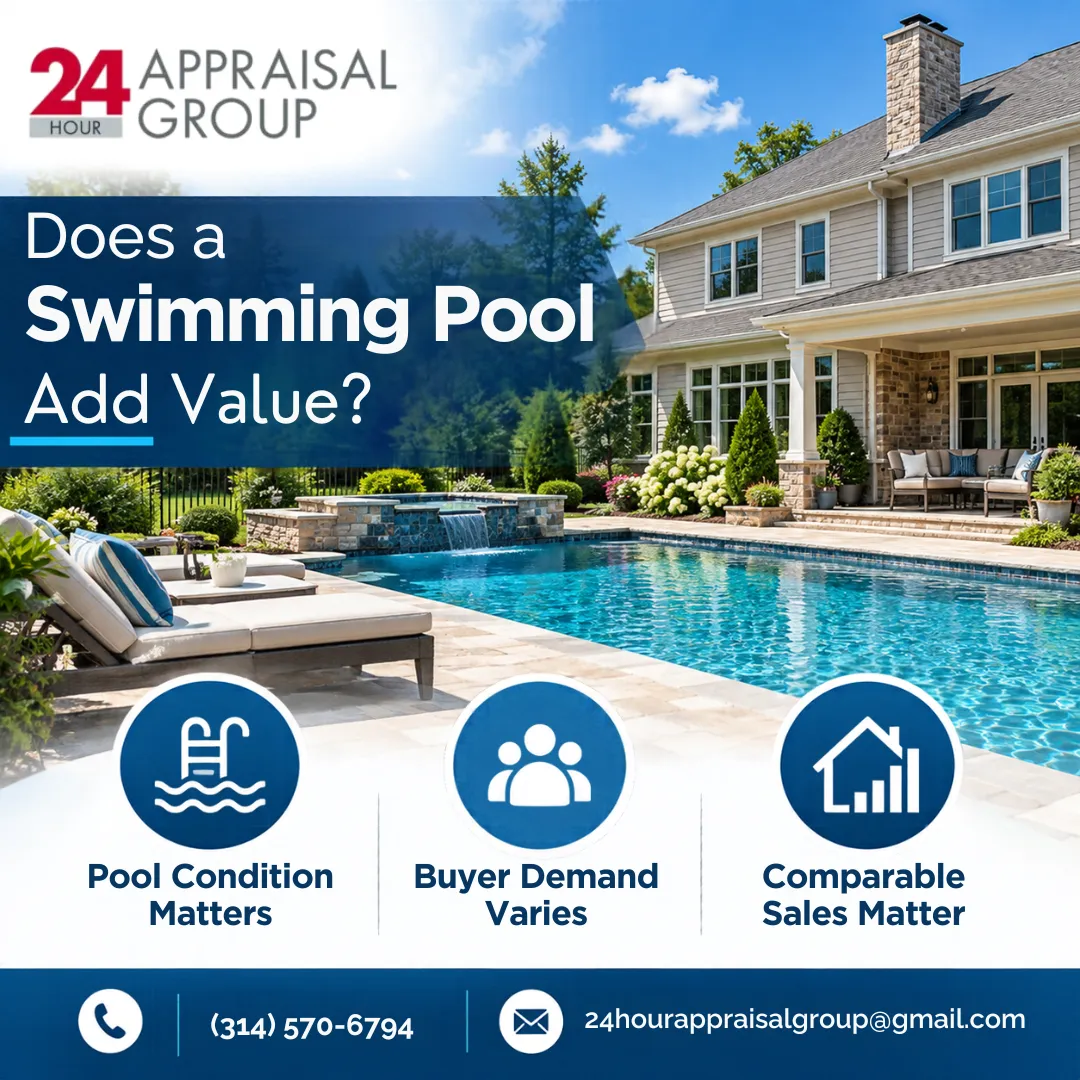
Does a Swimming Pool Add Value to a Home in St. Charles County?
A swimming pool can add value to a home, but it does not automatically increase value by the amount it cost to install.
For an appraiser, the more important question is:
How does the local market react to homes with pools?
The answer can depend on the pool’s condition, design, maintenance, neighborhood, lot size, and whether buyers in that market consider a pool desirable.
Own a home with a pool and want to understand how it may affect your property’s value?
[Discuss Your Property With an Appraiser]
What Does an Appraiser Look at When a Home Has a Pool?
A pool is evaluated as part of the overall property.
An appraiser may consider:
Pool type and size
Condition
Age
Quality of construction
Surrounding patio or decking
Landscaping
Safety features
Overall maintenance
Lot usability
Comparable sales with pools
A well-maintained pool that fits naturally with the property may contribute differently than an older pool that needs major repairs.
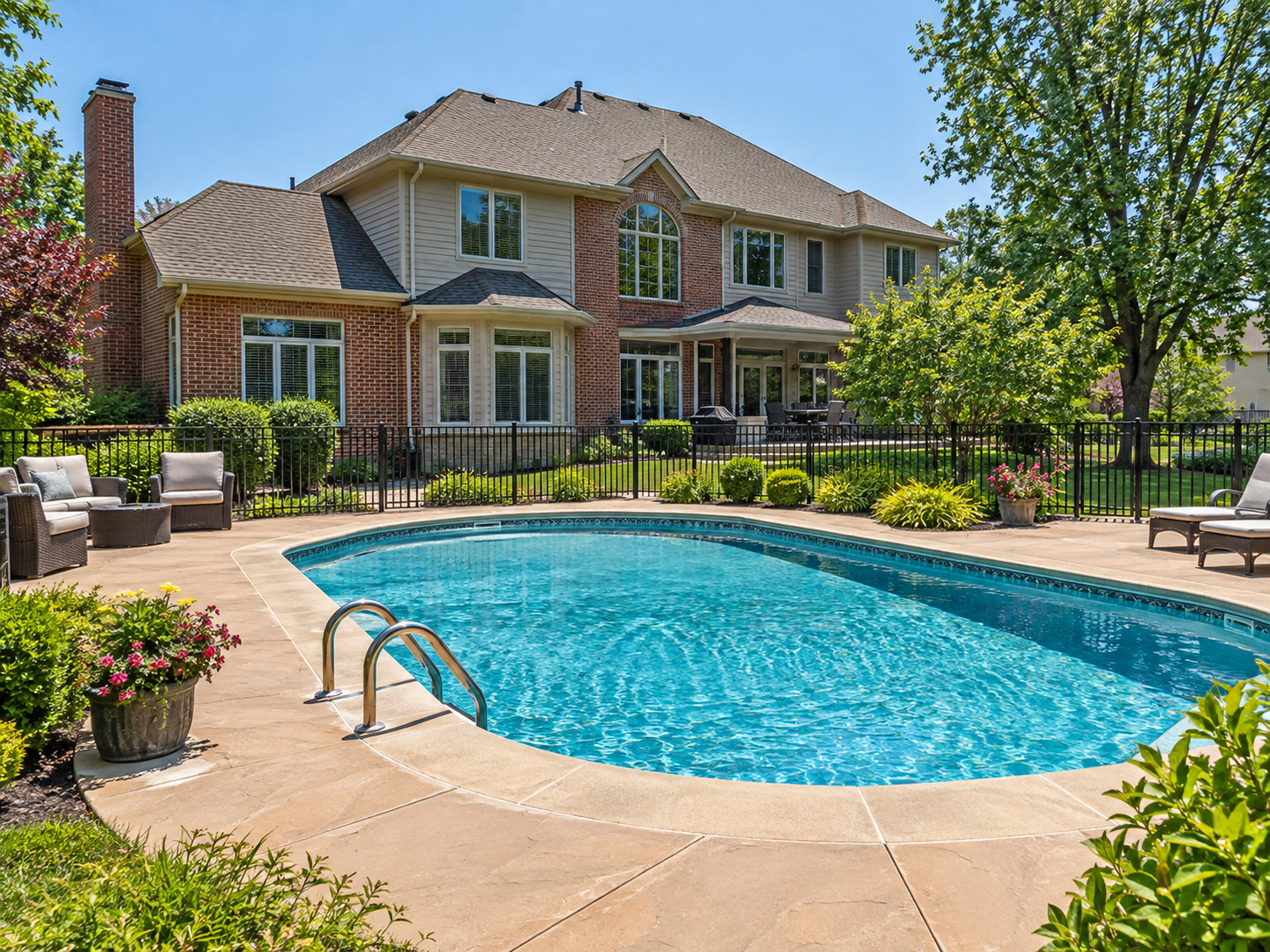
Does the Cost of Installing a Pool Equal Its Added Value?
Usually not.
A homeowner may spend tens of thousands of dollars installing a pool, but market value is not based only on construction cost.
The real question is:
Are buyers willing to pay more for homes with pools, and by how much?
That is why comparable sales matter.
If similar homes with pools consistently sell for more than similar homes without them, that may provide evidence of contributory value.
Can a Pool Ever Hurt Marketability?
It can.
Some buyers see a pool as a major benefit.
Others may think about:
Maintenance
Insurance
Safety
Utility costs
Repair expenses
Reduced yard space
That means the same pool may be viewed differently depending on the neighborhood and buyer pool.
A home in O’Fallon or Wentzville may also face different buyer expectations than a property in another part of the St. Louis Metro Area.
The market—not a fixed percentage—determines how much a pool contributes.
[Get Professional Valuation Guidance]
Why Comparable Sales Are So Important
Appraisers generally look for sales of similar homes that also have pools.
The goal is not simply to find the closest property.
A useful comparable should be similar in:
Home size
Condition
Lot size
Neighborhood
Quality
Pool features
Overall buyer appeal
If direct pool comparables are limited, the appraiser may need to expand the search area or analyze additional market evidence.
What About Older or Damaged Pools?
Condition matters.
A newer, well-maintained pool may contribute positively to buyer appeal.
An older pool with cracked decking, equipment problems, leaks, or significant deferred maintenance may create a different market reaction.
In some cases, the cost of repairing or replacing major components can affect how buyers view the property.
That is why the appraiser evaluates the pool as it exists today—not what it originally cost.
Why Jacob’s Experience Matters
Jacob Geringer is a Certified Residential Appraiser with more than 26 years of local real estate experience.
Features like pools can be difficult to evaluate because there is no universal adjustment that applies to every property.
The analysis depends on local comparable sales, property condition, neighborhood expectations, and buyer behavior.
Jacob’s experience helps connect those individual property features to the market evidence that actually supports value.
When Should You Consider an Appraisal?
A professional appraisal may be helpful if you:
Own a home with a swimming pool
Are preparing for a private sale
Need an estate or probate valuation
Are considering refinancing
Recently installed or renovated a pool
Have conflicting online estimates
Want an independent opinion of property value
Understand What Your Pool Actually Contributes
If you own a home with a pool in St. Charles, O’Fallon, St. Peters, Wentzville, Lake St. Louis, or the greater St. Louis Metro Area, do not assume the pool adds a fixed amount to your home’s value.
A professional appraisal can help determine how the market appears to respond to that feature.
Get a property-specific valuation based on your home, your pool, and the local market.
[Discuss Your Appraisal Needs]
FAQ Section
Does a swimming pool always increase home value?
No. The contribution depends on condition, neighborhood, buyer demand, comparable sales, and the property as a whole.
Does an in-ground pool add more value than an above-ground pool?
Often they are viewed differently because of construction, permanence, and market appeal. The actual contribution depends on local market evidence.
Does the cost of a pool determine how much value it adds?
No. Appraised value is based on market reaction, not installation cost alone.
Can an older pool reduce value?
Potentially. Significant repair needs, outdated equipment, or poor condition can affect buyer perception and marketability.
Can an appraiser determine exactly what my pool is worth?
An appraiser does not usually value the pool in isolation. Instead, the analysis determines how the pool contributes to the overall property value.
