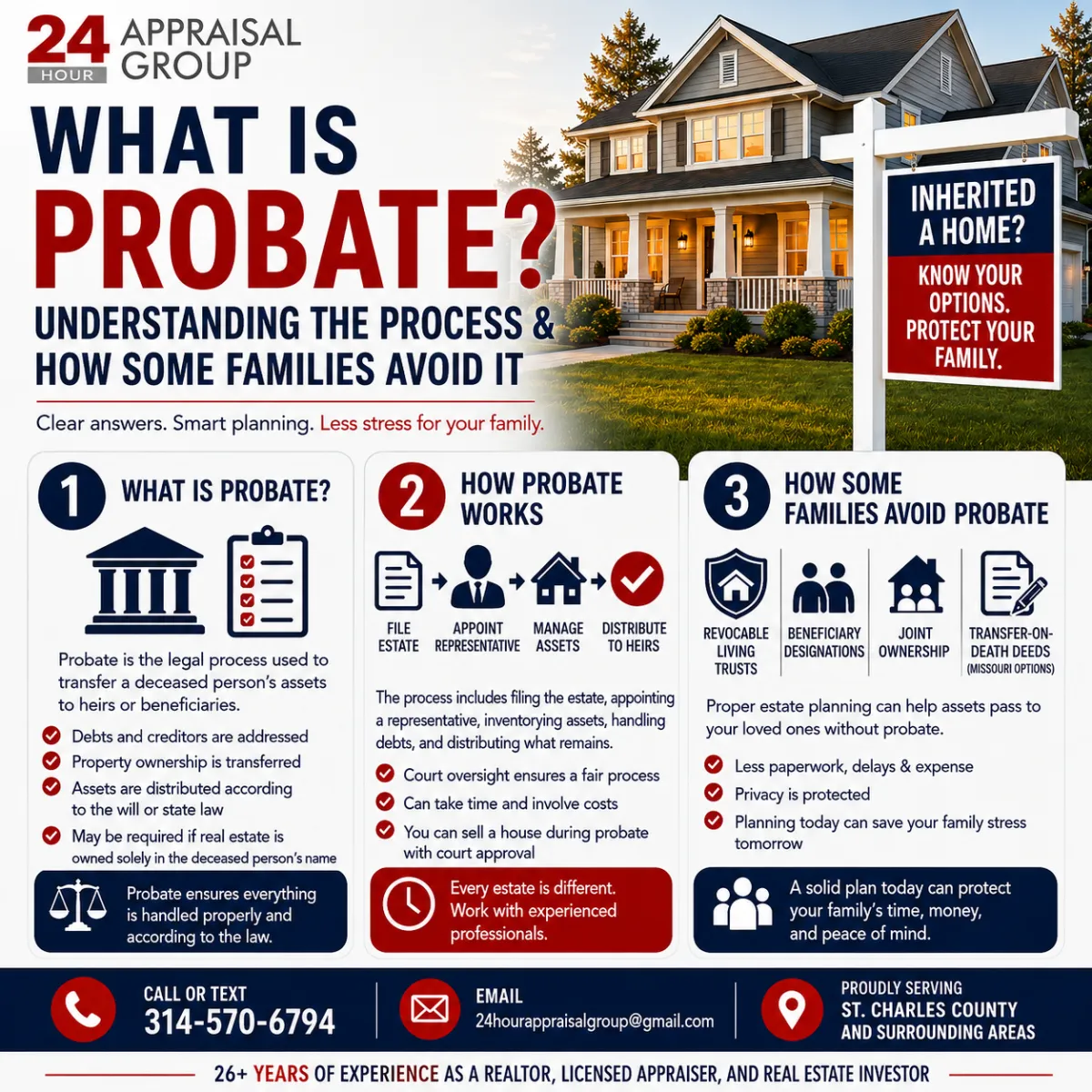
What Is Probate? Understanding the Process and How Some Families Avoid It
By a St. Charles County Realtor, Licensed Appraiser, and Real Estate Investor
If you've recently lost a loved one and inherited a home, you've probably heard the word "probate."
For many families, probate can seem confusing, overwhelming, and intimidating.
One of the first questions I hear is:
"Do we have to go through probate to sell the house?"
The answer depends on how the property was owned and whether any estate planning was completed before death.
After more than 26 years in real estate, appraising thousands of homes, and helping families navigate inherited property sales throughout St. Charles County, I've seen firsthand how proper planning can simplify the transfer of real estate—and how a lack of planning can create unnecessary delays and expenses.
What Is Probate?
Probate is the legal process used to transfer a deceased person's assets to heirs or beneficiaries.
The probate court helps ensure that:
Debts are paid
Creditors are addressed
Property ownership is properly transferred
Beneficiaries receive their inheritance according to the law or a valid will
If someone dies owning real estate solely in their name, probate may be required before the property can be transferred or sold.
Every situation is unique, so families should consult a qualified Missouri probate attorney regarding their specific circumstances.
What Happens During Probate?
While every estate is different, the probate process generally involves:
1. Filing the Estate
A petition is filed with the probate court to open the estate.
2. Appointment of a Personal Representative
The court appoints an executor (if named in a will) or a personal representative to manage estate affairs.
3. Inventory of Assets
The estate's assets are identified and documented.
This often includes:
Homes
Bank accounts
Vehicles
Investments
Personal property
4. Notification of Creditors
Creditors are given an opportunity to make claims against the estate.
5. Estate Administration
The personal representative manages estate affairs and may seek court approval for certain actions.
6. Distribution of Assets
After debts and expenses are resolved, remaining assets are distributed to beneficiaries.
Can You Sell a House During Probate?
In many cases, yes.
However, the process can vary depending on:
The estate structure
Court requirements
Ownership issues
The authority granted to the personal representative
This is why it's important to work with experienced legal and real estate professionals when selling inherited property.
Why Probate Gets a Bad Reputation
Probate is often portrayed as something families should fear.
In reality, probate serves an important legal purpose.
However, it can involve:
Additional paperwork
Court filings
Legal fees
Time delays
Administrative responsibilities
For some families, probate proceeds smoothly.
For others, disputes between heirs, title issues, or incomplete estate planning can make the process more challenging.
How Some Families Avoid Probate
One of the most common estate planning goals is reducing or avoiding probate where appropriate.
Several strategies may help accomplish this.
Revocable Living Trusts
A trust can own property rather than the individual homeowner.
When properly established and funded, assets held in a trust can often pass to beneficiaries without going through probate.
Beneficiary Designations
Certain financial accounts may pass directly to named beneficiaries.
Joint Ownership Arrangements
Some forms of joint ownership may allow property to transfer automatically upon death.
Transfer-on-Death Planning
Missouri law provides certain estate planning tools that may allow assets to transfer outside of probate.
Not every strategy is appropriate for every family, which is why legal advice is essential when creating an estate plan.
One of the Biggest Mistakes Families Make
Unfortunately, many homeowners believe that having a will automatically avoids probate.
In many cases, a will does not avoid probate.
Instead, the will often guides the probate process.
This misunderstanding can lead to surprises for heirs who expected assets to transfer automatically.
Why Property Valuation Matters During Probate
One of the most important steps in administering an estate is understanding the value of the real estate.
An accurate valuation can help:
Establish fair market value
Support estate administration
Assist with tax planning
Help resolve disputes among heirs
Guide decisions regarding a future sale
As a licensed appraiser, I often recommend obtaining a professional valuation early in the process so families can make informed decisions.
Planning Today Can Help Your Family Tomorrow
The easiest probate is often the one that was planned for years in advance.
While no estate plan can solve every problem, proper planning can often reduce confusion, delays, and stress for surviving family members.
Whether that means creating a trust, updating ownership documents, or reviewing beneficiary designations, taking action now may save your family significant challenges later.
The Bottom Line
Probate is the legal process used to transfer assets after death.
Some estates require probate.
Others may use trusts or other estate planning tools that allow assets to pass outside of probate.
The best approach depends on each family's circumstances and goals.
If you're handling an inherited property, understanding the probate process and obtaining accurate information about the property's value are two of the most important steps you can take.
Need Help Understanding the Value of an Inherited Property?
As a St. Charles County Realtor, licensed appraiser, and real estate investor with more than 26 years of experience, I help families understand what inherited homes are worth and what options may be available when it's time to sell.
Whether a property is in probate, held in a trust, or part of an estate settlement, having accurate information is the first step toward making confident decisions.
